Understand users, handoffs and the limits of existing tools before building.
02 / Deliver
A focused first release
Prototype, build and test the key end-to-end task with clear acceptance criteria.
03 / Operate
Ready for everyday use
Plan deployment, ownership, documentation and support before launch.
Why application work matters
Better software starts with a clearer process.
When customer requests, approvals and operational records live across spreadsheets, inboxes and disconnected tools, people spend time chasing information instead of moving work forward. A custom application only helps if it solves the right process—not if it simply digitises the confusion.
Slashside helps define a focused product, prototype the key journeys and build a business application around real users, clear access rules and dependable integrations. We agree acceptance criteria, test the important failure paths and plan ownership and support before launch.
Not every business problem needs custom software.
We compare configuring an existing product, connecting current tools and building a custom application. The right decision accounts for operating costs, data portability, integration constraints and the value of your distinctive workflow—not just the initial build fee.
What the work includes
From business process to a working product.
Your proposal defines workflows, user roles, integrations, migration, acceptance criteria and deployment responsibilities. Hosting, licences, usage-based services and independent assurance are separate unless included.
01
Define the workflow
Start with the task, the users and the decisions—not a feature wishlist.
Stakeholder and user workflow review
Existing-tool and build-versus-buy assessment
Release boundaries and acceptance criteria
What you receive
Product brief, workflow map and prioritised backlog.
02
Design the experience
Make everyday tasks clear across desktop and mobile.
Clickable prototype for key user journeys
Forms, validation, empty and error states
Keyboard, focus and accessible interaction review
What you receive
Approved prototype and interface specifications.
03
Build the application
Connect usable screens to reliable business logic.
Record models and workflow state transitions
Authentication and server-side access checks
Search, requests, approvals and reporting as scoped
What you receive
Working application with documented access rules.
04
Connect the systems
Move information deliberately, with failure paths accounted for.
API feasibility and field mapping
Retries, deduplication and sync error visibility
Migration trials and data reconciliation
What you receive
Scoped integrations with an operating checklist.
05
Verify the release
Test business-critical journeys before rollout.
Role and record-access negative tests
Cross-device, validation and integration QA
Staging acceptance, cutover and rollback planning
What you receive
Acceptance evidence and an approved release plan.
06
Launch & hand over
Make the product operable beyond the delivery team.
Client-controlled accounts and access inventory
Deployment, monitoring and restore procedures
Training, documentation and support boundaries
What you receive
Source handover, runbook and next-release priorities.
Your main goal
What does your application need to make possible?
Start with the business task that matters most. The first release should solve that journey before expanding the feature list.
Streamline operations
Give repeated work a reliable path.
For teams managing approvals, requests and handoffs across spreadsheets and email.
Map one high-value workflow from request to completion
Define ownership, status changes and exception handling
Connect the source systems without duplicating authority
Pilot with the people doing the work every day
What we review
Task completion, manual touches, rework and elapsed cycle time—with a consistent baseline.
A clear delivery path
Discover. Define. Build. Launch.
Each stage has a reviewable output. Scope changes, external dependencies and acceptance decisions stay visible throughout delivery.
01
Discover
Review users, process, existing systems, data sensitivity and build-versus-buy trade-offs.
Stage output
Product brief and feasibility findings.
02
Define
Prototype the key journeys and agree release scope, access rules, acceptance criteria and milestones.
Stage output
Approved prototype and delivery plan.
03
Build & verify
Deliver in reviewable increments; test workflows, denied access, integrations and failure paths.
Stage output
Tested release candidate and acceptance record.
04
Launch & evolve
Plan cutover, train the team and hand over operating documentation with agreed support boundaries.
Stage output
Live release, runbook and next-step backlog.
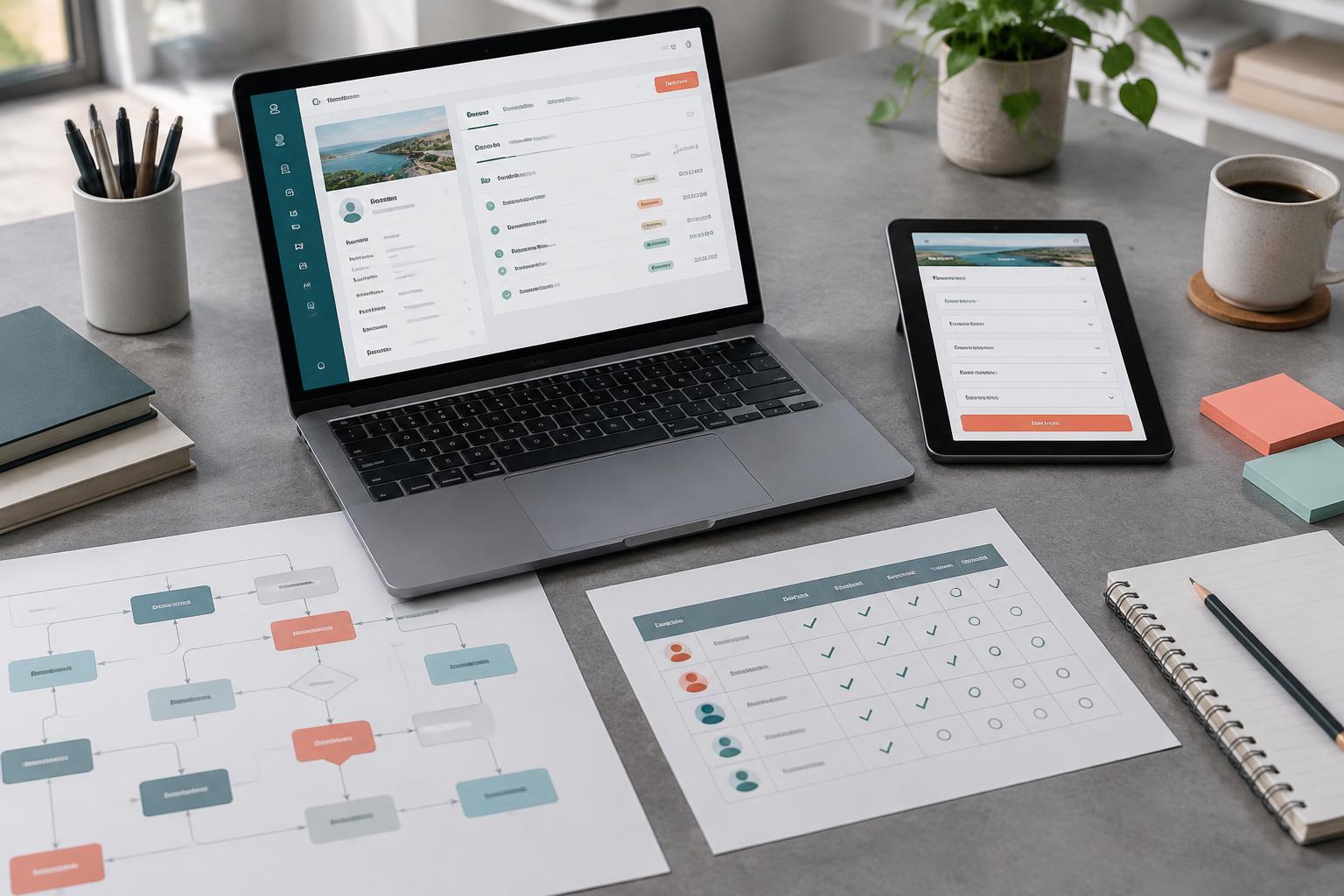
Illustrative concept imagery—not client software, live operational data or team photography.
Built for real operations
The difficult details belong in the plan.
A polished screen is only part of an application. Access boundaries, integration failures and recovery procedures determine whether the product is ready for everyday use.
Access enforced beyond the screen
Agree who can read, change and export each type of record. Test denied requests and cross-account isolation, not just the visible menu.
Integrations that can fail safely
Define the system of record, duplicate handling, retries and exception ownership. A sync failure should be visible and recoverable.
A launch the team can operate
Agree cutover, backup and restore responsibilities, monitoring, documentation and escalation. Support hours and service commitments belong in the written scope.
Choose a sensible starting point
Choose the right first investment.
Start with discovery, commission a focused application or extend an existing product. The right engagement depends on how well the problem is understood and what your team can support.
Discovery & prototype
Validate the need before committing to a full build.
Workflow mapping, technical feasibility, a clickable prototype and a prioritised release plan.
Agree before starting
Users, research access, prototype depth and whether any production build is included.
Focused application build
Deliver a portal, internal tool or first product release with clear boundaries.
Agreed journeys, data model, roles, integrations, acceptance testing and launch handover.
Hosting, licences and third-party costs are separate unless included. Your agreement defines source-code ownership, third-party licences and exit arrangements. An enquiry is not an order or payment.
Reporting with context
Measure the workflow—not just the release.
Agree a baseline and the tasks that matter before delivery. Review usage, operational outcomes and technical health together, with test coverage and external dependencies stated.
Web application measures and interpretation limits
Signal
What we review
What it cannot prove
Workflow efficiency
Time to complete the agreed task, manual handoffs and rework compared with a defined baseline.
A faster workflow does not automatically prove cost savings; workload and adoption matter.
User adoption
Activation and repeat completion of key tasks by eligible users.
Logins alone are not meaningful use, satisfaction or product-market fit.
Application reliability
Errors, failed jobs, response times and availability during the agreed monitoring window.
Third-party dependencies and monitoring gaps affect visibility; no uptime guarantee is implied.
Data & access integrity
Migration reconciliation, integration exceptions and pass/fail evidence for agreed access cases.
Passing scoped tests is not proof of complete security or legal compliance.
Release quality
Acceptance criteria, unresolved defects, accessibility checks and recovery readiness.
Automated checks do not replace user acceptance, manual review or independent assurance.
We do not guarantee productivity savings, product-market fit, uptime or freedom from security incidents. Security and accessibility reviews cover the agreed scope; independent audits, penetration testing and regulated compliance require explicit specialist arrangements.
Grounded in official guidance
Good application work has clear foundations.
Official application security, accessibility, API and secure development guidance. References are not certifications, endorsements of Slashside or a guarantee of compliance.
OWASP — ASVS
A framework for defining and checking application security requirements. Referenced controls must be scoped and tested.